
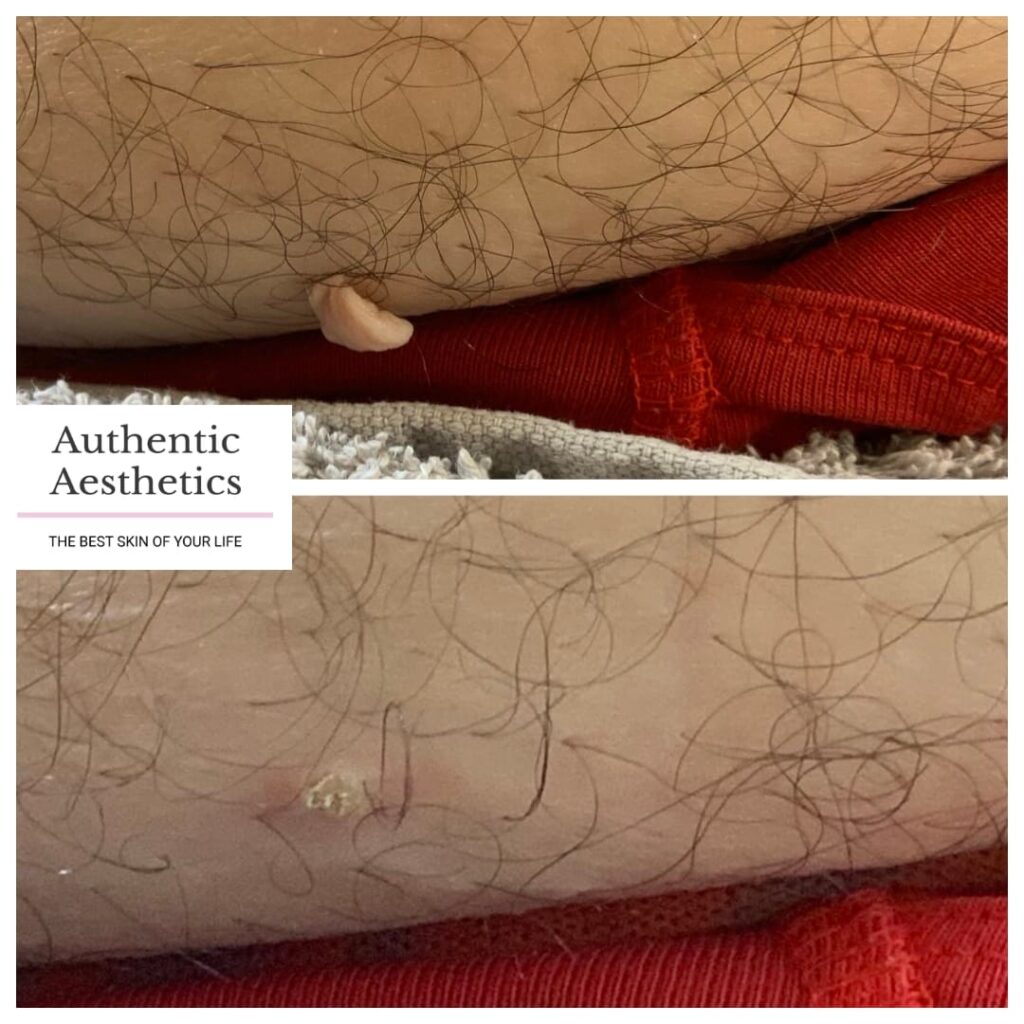


Skin Tags FAQs
Cauterisation is the safest and fastest way to remove them. We use ACP (an advanced form of electrolysis) that involves using a probe with a current emitted to the end of it, by tapping this against the neck of the skin tag, it’s cauterised instantly and will subsequently harden up and fall off in the following days.
Skin tags are primarily caused by friction, they tend to develop in areas where skin rubs against skin or clothing repeatedly over time. Hormonal changes, particularly during pregnancy, and elevated insulin levels associated with being overweight or having type 2 diabetes are also significant contributing factors. Genetics play a role too, meaning if a close family member is prone to skin tags, you are more likely to develop them yourself.
Yes — skin tags can be safely and permanently removed through ACP Blemish Removal. This professional treatment uses a controlled electrical current to target and break down the skin tag directly, leaving the surrounding skin completely unaffected. It is quick, minimally invasive and delivers permanent results in a safe clinical setting.
Skin tags are caused by an overgrowth of collagen and blood vessels trapped inside a thickened piece of skin, most commonly triggered by repeated friction, hormonal changes, genetics and insulin resistance. They are particularly common in people who are overweight, pregnant or have a family history of skin tags, though they can develop in anyone regardless of skin type or age.
If you have skin tags, it is most likely due to a combination of friction, genetics and hormonal factors, all of which can cause excess skin cells to cluster together and form a soft, hanging growth. They are more common than most people realise and are nothing to be concerned about, but if they are bothering you cosmetically or becoming irritated, professional removal is a straightforward and permanent solution.
ACP Blemish Removal is widely regarded as one of the most effective professional treatments for permanently removing skin tags. Using advanced electrolysis technology, it targets the skin tag with a precise electrical current, breaking it down safely and completely without affecting the surrounding skin. Results are immediate, downtime is minimal and the treatment is suitable for skin tags in most areas of the face and body.
Skincare alone cannot remove skin tags. No topical product is able to break down a skin tag effectively or permanently. While keeping the skin clean and moisturised can help prevent irritation around existing skin tags, professional treatment is the only reliable route to removing them. If you have skin tags you’d like to address, ACP Blemish Removal at Authentic Aesthetics is the safe, permanent solution.
Skin tags typically appear as small, soft, flesh-coloured or slightly darker growths that hang from the skin on a thin stalk. They can range in size from just a couple of millimetres to over a centimetre and are most commonly found on the neck, eyelids, underarms, groin and beneath the breasts. They are generally smooth in texture and painless, though they can become irritated if caught on clothing or jewellery.
Skin tags can develop in anyone, but they are most commonly seen in adults over 40, people who are overweight or obese, those with type 2 diabetes or insulin resistance, pregnant women, and individuals with a family history of skin tags. Areas of the body prone to skin friction are the most common sites for development, regardless of skin type or tone.
Skin tags can grow slowly over time, particularly if the area continues to experience friction or if hormonal changes are ongoing. While they rarely grow significantly larger, they are unlikely to disappear on their own — and the longer they are left, the larger they may become. Early professional removal is always the simplest and most straightforward option.
Do seek professional removal — ACP Blemish Removal is the safest, most effective and permanent way to remove skin tags, carried out by trained professionals in a clinical setting.
Do keep the area clean and dry — particularly if a skin tag is in a zone prone to friction, as good skin hygiene helps prevent irritation and discomfort.
Don’t attempt to remove them at home — cutting, tying, freezing or applying over the counter removal products carries a real risk of infection, scarring and incomplete removal.
Don’t ignore them if they change — while skin tags are harmless, any growth that changes in size, shape, colour or begins to bleed should always be assessed by a professional before any treatment is carried out.
Skin tags themselves do not typically become infected, as they are benign skin growths rather than open lesions. However, skin tags in areas prone to friction can become irritated, inflamed and sore — and any attempt to remove them at home by cutting, tying or picking dramatically increases the risk of bacterial infection. Professional removal is always the safest route to avoid any risk of complications.
Skin tags are entirely benign and non-cancerous, they pose absolutely no risk to your health and will never develop into anything more serious. They are a purely cosmetic concern caused by excess skin growth. That said, it is always advisable to have any new or changing skin growth assessed by a professional before treatment, to ensure an accurate diagnosis and rule out anything that requires further investigation.
While skin tags cannot always be prevented entirely, maintaining a healthy weight to reduce skin friction, wearing loose breathable clothing in prone areas, and keeping skin clean and dry can all help slow their development. Managing blood sugar levels is also beneficial, as insulin resistance is a known contributing factor. A professional skin review can help identify your personal risk factors and advise on the best preventative approach for your skin.
Prices will vary based upon your location, the quality of the machine being used and the experience of your practitioner. Head to our price list to see pricing of our ACP blemish removal treatment which is the most commonly recommended treatment for sebaceous hyperplasia removal.